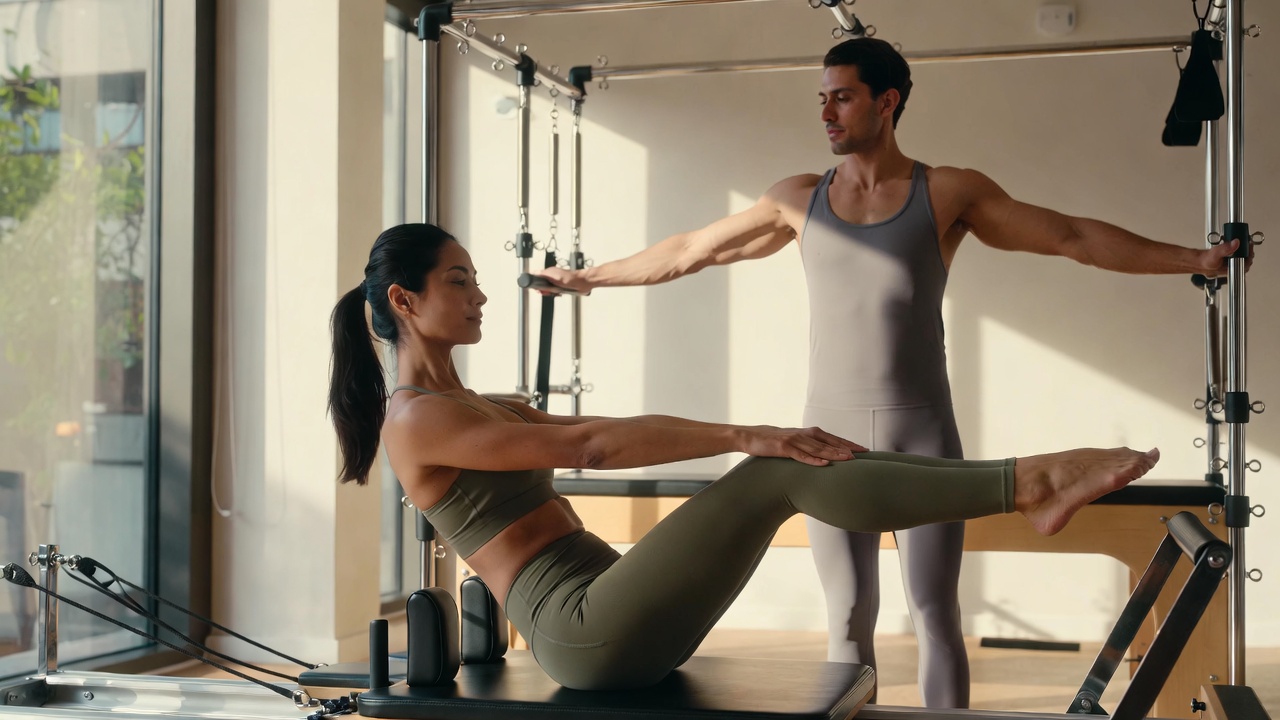
The Soul of the Machine: Why Your Pilates Equipment’s Design Matters More Than You Think
As Pilates enthusiasts—whether you are just beginning to build your home studio or are a fresh teacher stepping into your first full-time role—the world of equipment can feel overwhelming. We are bombarded with options. Some machines boast about their engineering, others about their exotic wood finishes, and others still about their aesthetic, minimalist appeal.
But when you take a step back, a crucial question emerges: What actually impacts your performance and your happiness? Beyond the marketing jargon and the glossy photos, what is the tangible difference between a piece of equipment that simply functions and one that truly transforms your practice?
Let’s strip away the hype and look at the intersection of design, fabrication, and the human experience. Because the truth is, the machine is not just a tool; it is a partner in your movement.
The Precision of Engineering: The Difference Between Resistance and Response
When we talk about "well-engineered" equipment, we aren't just talking about gears and springs that don't break. We are talking about the feel of the movement.
In a poorly engineered machine, the resistance can be jerky or inconsistent. You might find that the carriage doesn’t glide smoothly, causing you to subconsciously grip with your toes or tense your shoulders just to control the ride. This micro-tension destroys the very essence of Pilates: controlled, flowing movement from a stable core.
Conversely, a machine with precise engineering offers a "buttery" glide. The springs provide a consistent, progressive resistance that responds to your every micro-movement. When you perform a Knee Stretch on the Reformer, the machine should feel like it is reading your mind, offering support exactly when you need it and challenging you precisely when you push.
This responsiveness allows you to stop thinking about the equipment and start thinking about your body. It allows for proprioceptive feedback—that internal conversation between your muscles and your brain—to happen without static interference. For a teacher, this is invaluable. When you correct a client’s form, you want them to feel the adjustment in their body, not fight against a sticky wheel or a sluggish spring.
The Language of Materials: Wood, Metal, and Your Nervous System
Why do we gravitate toward machines made with "fine materials"? Is it just vanity? I would argue it runs much deeper.
Walk into a studio filled with equipment that has sharp edges, cheap paint, or hollow-sounding metal. Now, walk into a studio where the wood is warm to the touch, the metal is polished stainless steel, and the leather (or high-grade vinyl) is supple. Do you feel the difference? That’s your nervous system responding to your environment.
High-quality materials invite touch. They signal safety and permanence. When you lie down on a Cadillac with a plush, well-anchored mattress and smooth, rounded wooden bars, you are more likely to surrender your weight, to trust the apparatus. This trust is the precursor to release—release of tension, release of fear, and release of old movement patterns.
Furthermore, natural materials like hardwoods (maple, birch, walnut) have a "life" to them. They absorb vibration and create a sense of grounding. When you push off from a shoulder block made of solid wood, the feedback is different from pushing off a piece of plastic. It feels substantial, honest. This tactile experience fosters a deeper mind-body connection, reminding us that Pilates is an organic practice, despite being performed on a machine.
The Visual Aesthetic: Does Beauty Make You Stronger?
Here is a question worth pondering: Does a beautiful machine actually improve performance? The answer, I believe, is yes—because it improves consistency.
Think about your morning routine. If your space is cluttered and chaotic, your practice often feels the same. But if your equipment is visually pleasing—with clean lines, a harmonious color palette, and a minimalist silhouette—it becomes an object of desire. It calls to you. You want to spend time with it.
This is especially true for home users. Your Pilates equipment is not just gym equipment; it is furniture. It lives in your space. When it is designed well, it enhances your environment rather than cluttering it. That visual peace translates directly into mental peace.
For new teachers, the aesthetic of your studio is your silent salesperson. It communicates your standards before you even speak. A cohesive, beautiful studio tells your clients, "You are in a place of care and quality." It elevates the perceived value of the session and helps clients relax into the experience, making them more receptive to your cues.
Fabrication and Performance: The Unseen Precision
Let’s get a little technical for a moment. "Fabrication performance" refers to how the machine is put together. Are the bolts flush with the surface? Do the pulleys spin silently? Is the tracking of the carriage perfectly parallel?
These details might seem minor, but they have a cumulative effect on performance. Misaligned tracking, for example, forces your body to compensate. Over a 50-minute session, those micro-compensations add up. Instead of working the intended muscle groups (like the obliques or the hamstrings), you might be overworking your hip flexors or your QL (quadratus lumborum) just to stay centered on the machine.
High fabrication performance ensures that the machine is "neutral." It provides a true, straight path so that your body can find its own alignment. It acts as a mirror, reflecting your imbalances back to you clearly, without distortion from the machine itself. This is the hallmark of a great teaching tool: it reveals the truth of the body.
Happiness in the Details: The Ritual of Practice
Ultimately, the design of your equipment contributes to your happiness by enhancing the ritual of your practice.
Consider the tactile pleasure of adjusting leather straps that buckle smoothly versus plastic clips that pinch. Consider the satisfaction of a footbar that clicks securely into multiple height options, allowing you to transition seamlessly from Footwork to Pilates Push-Ups. These small moments of ease create a flow state.
When the equipment works with you, not against you, your practice becomes a form of meditation. You stop troubleshooting and start experiencing. You begin to look forward to the feeling of the padded shoulder rests, the sound of the breath syncing with the gentle whoosh of the carriage.
This happiness is not superficial. It is the deep satisfaction of being in a well-designed environment that supports your growth. It is the joy of using a tool that was crafted with the same intention that you bring to your practice.
Choosing Your Partner Wisely
So, what does this mean for you, the home user or the new teacher?
It means that when you are selecting equipment, you must look beyond the spec sheet. You need to sit on it, lie on it, and move on it.
- Listen to it: Does it squeak? Does it sound solid or hollow?
- Feel it: Run your hands along the edges. Are they smooth? Does the material feel warm or cold and clinical?
- Watch it: Does the carriage wobble, or does it track perfectly?
- Sense it: How does being near this machine make you feel? Anxious or calm?
The best equipment is the kind you forget about. It disappears, leaving only you and the movement. But to reach that point of transcendence, the foundation must be impeccable. The engineering, the materials, the fabrication, and the aesthetic all work in concert to create a space where performance can flourish and happiness can bloom.
Choose your partner wisely. Your body—and your soul—will thank you.