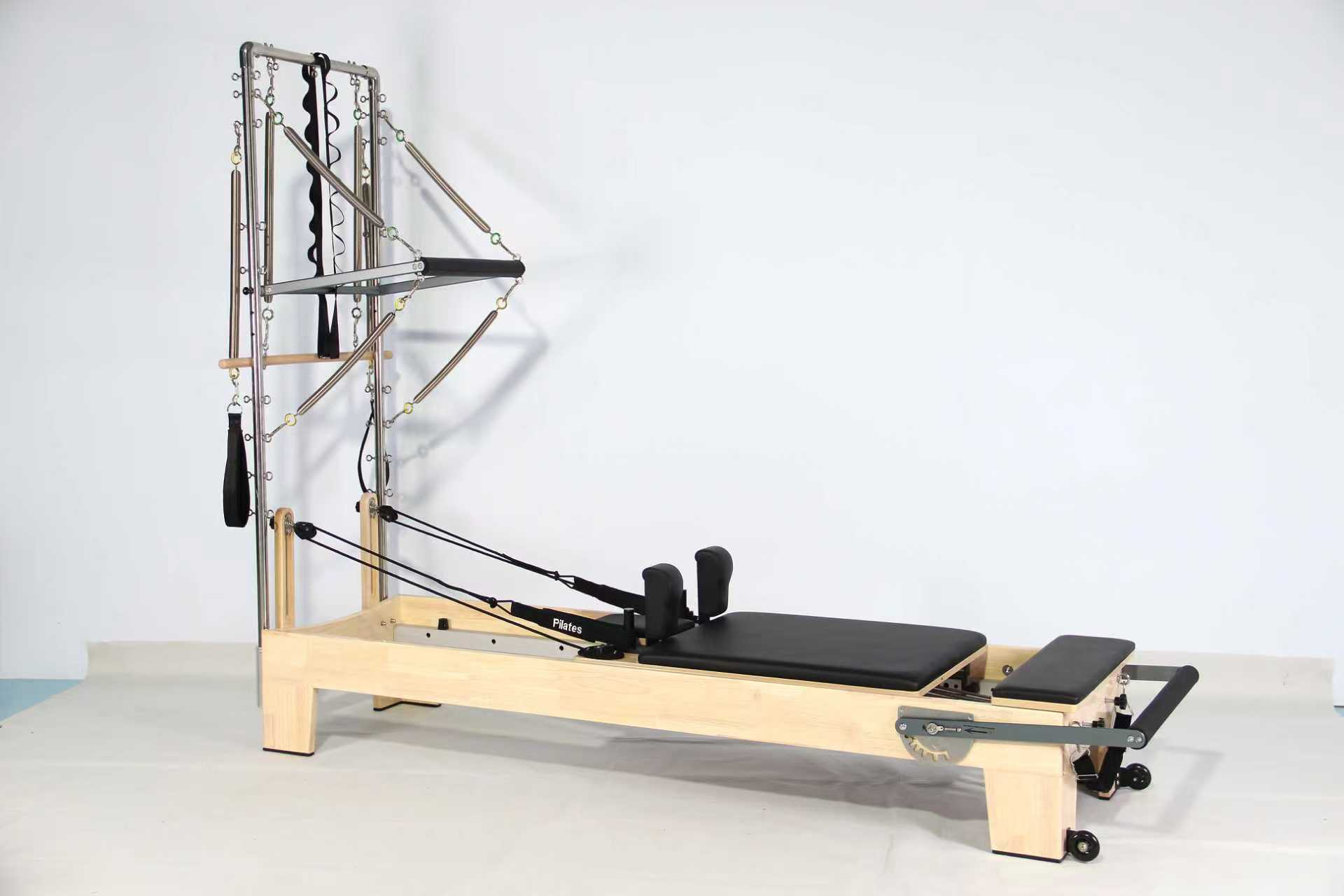
The Buyer's Guide: How to Choose a High-Performance Reformer or Cadillac
Whether you're a home user carving out a corner of your living room or a studio owner preparing to invest in a full fleet, choosing Pilates equipment is a big decision. It's financial, yes—but it's also personal. These machines will hold your body (and your clients' bodies) through thousands of movements. They will witness sweat, struggle, and breakthrough.
So how do you separate the truly high-performance machines from the ones that just look the part? Let's walk through the key elements you should inspect, touch, and test before you make that investment.
The Springs: The Heartbeat of the Machine
If there is one component that defines the "feel" of a Reformer or Cadillac, it is the springs. They are the resistance. They are the feedback. They are, quite literally, what makes Pilates Pilates.
What to look for: High-quality springs are made from tempered steel and offer consistent, even resistance throughout the entire range of motion. Cheap springs often have a "sticky" start—where you have to exert extra force to get them moving—followed by a sudden release. This jerky motion is not only frustrating; it prevents the controlled eccentric and concentric work that builds long, lean muscle.
Listen carefully. When you stretch a quality spring, it should be nearly silent. A noisy, creaking spring is a red flag. Also, pay attention to the hooks. They should be coated or designed to glide smoothly over the rail without catching. For studio owners, consider that springs are consumables. They will eventually wear out. Choose a brand that offers replaceable springs and clearly labels their resistance levels (usually by color coding).
The test: On a Reformer, perform a slow, controlled Footwork series. Can you feel the spring tension building evenly? When you pause mid-movement, does the carriage hold steady, or does it bounce? That bounce indicates uneven spring tension.
The Carriage and Glide: Friction Is Your Enemy
The relationship between the carriage and the rails determines everything about the flow of your practice. A high-performance machine should make you feel like you're gliding on ice—smooth, quiet, and effortless.
What to look for: Most high-end machines use either roller bearings or a wheel system. Roller bearings (often made of nylon or composite materials) tend to offer the smoothest, quietest ride and require less maintenance. They should fit snugly in the tracks—if there's too much play, the carriage will wobble side to side, which compromises alignment during single-leg work.
The rails themselves should be precision-milled, usually from stainless steel or anodized aluminum. Run your finger along them. They should be perfectly smooth, with no burrs or rough spots.
The test: Sit on the carriage and push gently with your feet against the shoulder blocks. The carriage should move with minimal initiation force. Then, try the Long Stretch series. If the carriage sticks or stutters when you shift your weight forward, the glide system is subpar.
The Frame: Stability Meets Soul
The frame is the foundation. It needs to be rock-solid under load, yet it also contributes to the energy of the space.
What to look for: For wood frames, hardwoods like birch, maple, and beech are the gold standard. They are dense, durable, and have natural vibration-dampening properties. Cheaper machines often use particle board or softwoods that can flex or even crack over time. Look at the joinery—dovetail joints or mortise-and-tenon construction indicate craftsmanship. Staples and glue? Not so much.
For metal frames (common in Cadillacs and some Reformers), look for thick-gauge steel with smooth, chip-resistant powder coating or polished finishes. The frame should not twist or torque when you apply uneven pressure, such as during side-lying work on a Reformer.
The test: For a Reformer, stand at the side and try to wiggle the frame with your hands. There should be zero movement. For a Cadillac, gently hang from the top bar. Does the frame sway or feel unstable? It shouldn't.
The Ropes and Straps: Your Connection Point
Your hands and feet connect to the machine through the ropes and straps. If this interface is uncomfortable or insecure, your entire practice suffers.
What to look for: Ropes should be low-stretch and braided for durability. Some high-end machines use coated cable, which is extremely durable and smooth through the pulleys. Check the handles—are they padded? Is the grip comfortable for different hand sizes? For foot straps, look for soft yet supportive leather or high-grade vinyl that won't dig into the tops of your feet.
The loops themselves are critical. They should be adjustable but stay firmly in place once set. Nothing disrupts a flow state like a foot loop that slips halfway through a session.
The test: Grip the handles and perform a bicep curl. Do the ropes run smoothly through the pulleys, or do they catch? Slip your feet into the straps. Is the material soft against your skin? Can you adjust the loop size easily without the buckle digging into your ankle?
The Pulleys: The Silent Partners
Pulleys are often overlooked, but they are responsible for the quality of the rope movement. Cheap pulleys introduce friction, noise, and uneven wear.
What to look for: High-quality pulleys are ball-bearing based, often sealed to prevent dust and hair from clogging them. They should spin freely and silently. The wheel itself should have a deep groove to keep the rope centered.
The test: Pull the rope out at different angles. Does the pulley track the rope smoothly, or does it bind? Spin the pulley with your finger—it should continue spinning for a moment, not stop dead.
The Footbar: The Workhorse
The footbar on a Reformer takes a beating. It gets pushed, stood on, and wrapped with Therabands. It needs to be both comfortable and indestructible.
What to look for: Padding is essential. A bare metal bar is uncomfortable for bare feet and can be slippery. Look for foam or leather-wrapped padding that provides grip without being too soft. The bar should adjust easily to multiple heights and lock securely into place—there should be no rattling.
The test: Place the ball of your foot on the bar and press. Does the bar feel stable, or does it wobble on its mounts? Change the height a few times. Is the mechanism intuitive and quick, or do you have to fight with it?
The Headrest and Shoulder Blocks: The Comfort Zone
These are the parts of the machine that support your spine and head. Poor design here can lead to neck strain and discomfort.
What to look for: The headrest should be padded and adjustable in height. When you lie down, your cervical spine should be in a neutral position, not craned back or jammed forward. Shoulder blocks should be firmly padded and positioned so that they support your shoulders without compressing them. They should also be adjustable for different body widths.
The test: Lie down on the Reformer. Does the headrest support the natural curve of your neck? Can you relax your shoulders onto the blocks without feeling like you're being pushed forward?
For Studio Owners: The Durability Factor
If you're outfitting a studio, your considerations multiply. A machine that works beautifully for one home user might not survive eight classes a day.
What to look for: Look at the upholstery. Commercial-grade vinyl or leather is a must—it needs to withstand constant cleaning and sweat without peeling or cracking. Check the stitching; reinforced, double-stitched seams last longer.
Consider the replaceability of parts. Can you order new springs, ropes, or pulleys easily? Is the manufacturer responsive to warranty claims? A machine that requires a week of downtime for a simple repair is a machine that loses you money.
Also, think about storage. If you offer tower classes or have limited space, does the Cadillac have a fold-away push-through bar? Does the Reformer stand upright for storage?
For Home Users: The Space and Lifestyle Fit
As a home user, your machine needs to integrate into your life, not dominate it.
What to look for: Measure your space carefully—including ceiling height if you're considering a Cadillac. Some Reformers are longer than others; make sure you have enough room for the carriage to travel fully without hitting a wall.
Consider the aesthetic. Since this machine will live in your home, choose a finish and material that complements your space. You're more likely to use a machine that you love looking at.
Think about noise. In a quiet home environment, a squeaky machine is distracting. Prioritize silent operation.
Finally, consider your own growth. A machine that offers multiple spring settings and attachments will allow you to grow your practice over years, rather than outgrowing it in months.
The Intangible: How Does It Make You Feel?
After you've checked all the boxes—springs, frame, pulleys, glide—there's one more factor. It's the hardest to quantify, but it might be the most important.
Step onto the machine. Close your eyes. Move.
Does the machine disappear beneath you, leaving only the sensation of your muscles working and your breath flowing? Or do you find yourself thinking about the equipment—the roughness of an edge, the stiffness of a strap, the wobble of a footbar?
The best machines have a quality of "presence without intrusion." They support you completely but demand nothing from your attention. They become extensions of your body.
Whether you're buying for yourself or for a studio full of clients, trust this feeling. It's the sum of all the engineering, materials, and craftsmanship—translated into the language of movement.
Choose wisely. Your practice deserves it.